



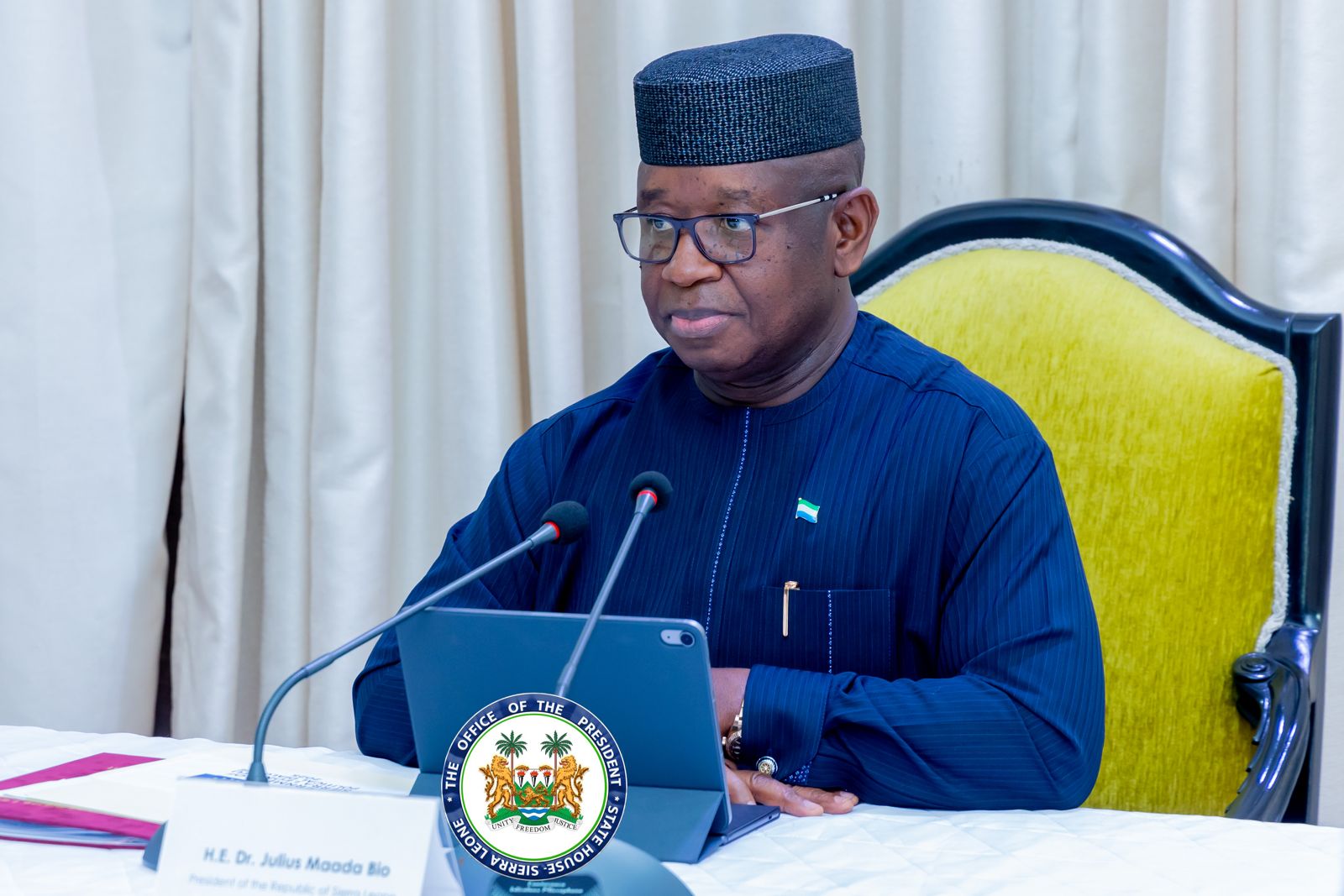
The International Monetary Fund (IMF) today announced the completion of the first and second reviews of Sierra Leone’s Extended Credit Facility (ECF) programme, unlocking an immediate disbursement of about US$79.8 million to support the country’s economic reform agenda.
The decision brings total disbursements under the ECF arrangement to US$127.8 million since its approval in October 2024. The programme is designed to restore macroeconomic stability, maintain debt sustainability, curb inflation, rebuild foreign exchange reserves, and strengthen governance and institutions.
However, the IMF noted that the first review was delayed by significant program slippages in 2024. These included fiscal overruns, which were financed partly through central bank purchases of government securities, contributing to fiscal dominance, as well as reserve depletion and delays in structural reforms. As a result, Sierra Leone breached several performance criteria, prompting the IMF to grant waivers based on corrective actions taken by the authorities.
Despite recent improvements, the IMF cautioned that debt remains at a high risk of distress, while foreign exchange reserves fell to just 1.5 months of import cover by end-September 2025, underscoring the fragility of external buffers.
Economic indicators have shown signs of recovery. Growth is projected at 4.4 percent in 2025, driven mainly by mining and agriculture, while inflation declined sharply to 4.4 percent in October 2025, supported by tight macroeconomic policies and a relatively stable leone, the country’s currency. The cost of government borrowing has also eased, according to the IMF.
Nevertheless, the IMF stressed that stronger fiscal tightening than previously planned is now unavoidable to correct earlier slippages. It called for strict expenditure control, improved tax compliance, and better public financial management to avoid a repeat of deficit overruns. At the same time, the Fund urged the authorities to protect social spending amid the adjustment.
On debt management, the IMF warned against excessive reliance on domestic borrowing and central bank financing. It advised Sierra Leone to secure more grants and concessional financing, lengthen debt maturities, broaden the investor base for government securities, and ensure borrowing is done at sustainable rates.
The IMF also highlighted risks of reform fatigue, given the scale of fiscal adjustment required, and urged faster implementation of governance and anti-corruption reforms following the publication of the Governance and Corruption Diagnostic report.
While the ECF programme is back on track, the IMF made clear that rebuilding reserves, reducing debt vulnerabilities, curbing central bank financing of government, and sustaining reforms will be critical if Sierra Leone is to avoid renewed macroeconomic instability.