



By Solomon Joe
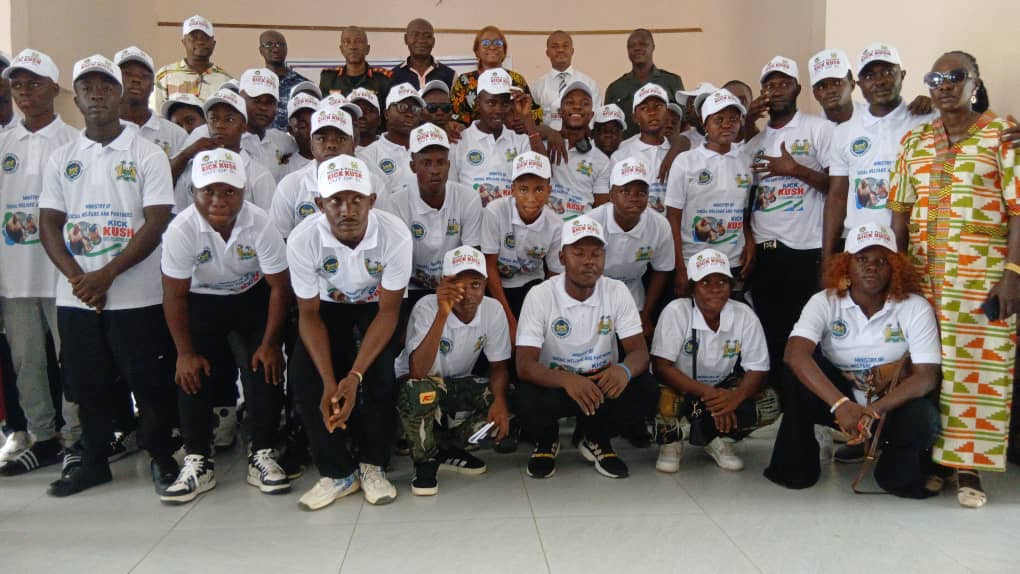
Forty-two kush victims were Monday discharged from the Gondama rehab centre in Bo after completing a 55-day rehabilitation programme for drug users, marking the second cohort of substance abusers successfully rehabilitated at the centre in less than a year.
These ambassadors, as they are now called, went through medical and psychosocial therapy, including detoxification, counselling, and behavioural change. Health officials described the process as physically and emotionally demanding but said it was essential to rebuilding the lives disrupted by addiction.
Among those discharged were three females and 14 university students, who are now ready for integration into society.
For some families, it was the first time in a long while they saw their children in a state of sound mind, being sober, alert, and hopeful.
Dr. Stevens Amara Ngegbai, the district medical officer, said that recovery does not end at discharge. Noting that kush is a dangerous threat to the youth, Dr. Ngegbai drew their attention to the dangers of relapse and urged families and communities to provide sustained support.
The rehabilitation programme, he said, follows a bio-psychosocial model that addresses physical health, mental wellbeing, and social reintegration.
Brigadier A. O. Koroma, commander of the 5th Infantry Brigade, described the scene as a watershed moment for the parents and communities. He cautioned the ambassadors against returning to drug use, reminding them that substance abuse now poses far greater risks to them than before.
Delivering the keynote address, Minister of Social Welfare Melrose Kaminty appealed to both the youths and their parents to see recovery as a shared responsibility. She said the rehabilitation programme was a huge financial and moral commitment by the government aimed at saving lives and restoring hope.
“The real test begins now,” she said, urging the discharged youths to demonstrate change through their actions. She encouraged parents to welcome their children home, noting that acceptance and guidance are critical to prevent a relapse.
Madam Kaminty announced that reintegration would follow, with support for students to return to university, and vocational training opportunities for those outside the formal education system. She added that the ministry would work with other government institutions to ensure that recovery is matched with practical opportunities for a fresh start.