



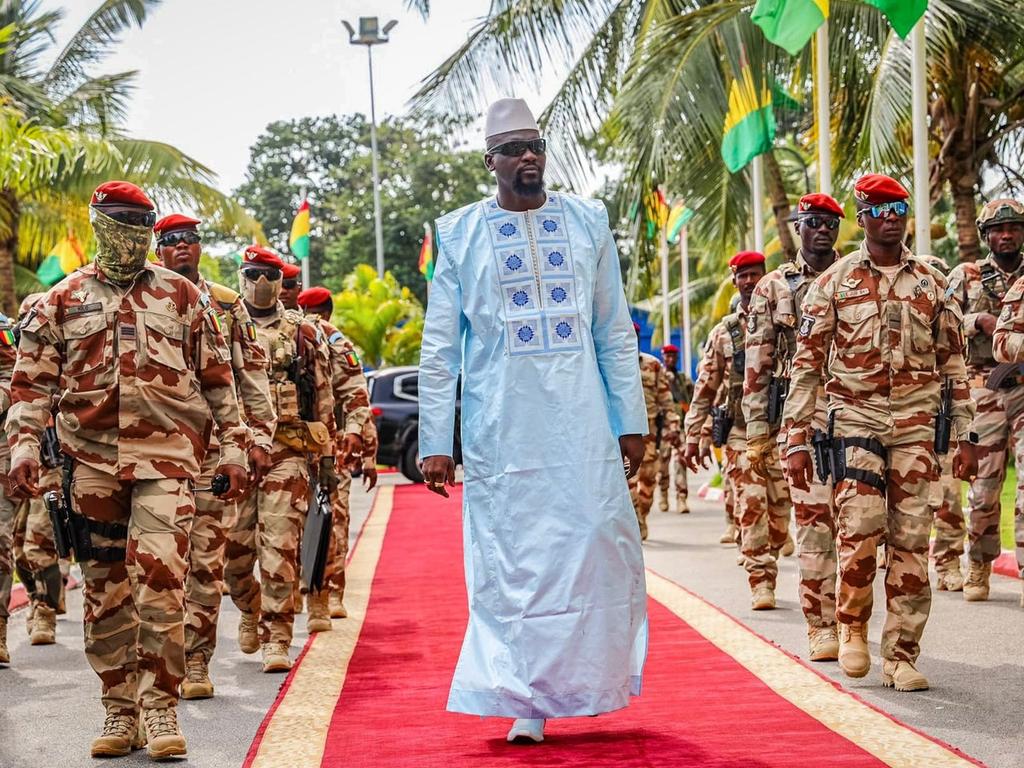
Diplomatic relations between Sierra Leone and Guinea have reached a critical tipping point following the abduction of sixteen Sierra Leonean security personnel by Guinean armed forces along the border in Falaba district.
Sierra Leone’s Ministry of Information and Civic Education said personnel of the Guinean Armed Forces on Monday crossed into the border town of Kalaiyere, Sulima chiefdom, where the Republic of Sierra Leone Armed Forces (RSLAF) and police personnel were engaged in brickmaking for a planned border post and accommodation facility, when Guinean troops stormed the area and took hostage their personnel, seized their arms and ammunition, and transported them into Guinean territory.
However, the Guinean authorities claimed that the Sierra Leonean soldiers had entered their territory in Koudaya without authorization, where they were apprehended and placed under investigation.
While Freetown demands the “unconditional release” of its police and military officers, Guinean authorities maintain the personnel were apprehended for an unauthorized border crossing, leaving the two Mano River neighbors locked in a high-stakes standoff.
The incident has revived scrutiny of the unresolved status of Yenga, a border settlement internationally recognised as part of Sierra Leone but occupied by Guinean troops since the country’s civil war. Guinean forces entered Yenga during the conflict to help prevent rebel expansion and protect their frontier. Although the war ended in 2002, repeated diplomatic efforts by Sierra Leone to secure restoration and control of Yenga did not yield any result.
Sierra Leonean officials say the Guinean forces’ continued occupation of Yenga has emboldened military advances in other areas. Guinean authorities, for their part, have historically framed their actions as security-driven and subject to bilateral dialogue.
The latest confrontation has triggered anxiety among Sierra Leoneans at home and abroad, with civil society voices urging the government to consider international legal action if bilateral diplomacy fails. Some commentators have pointed to the precedent set when Nigeria and Cameroon submitted their Bakassi Peninsula dispute to the International Court of Justice, which delivered a binding ruling that both states ultimately implemented.
Security observers warn that while the current episode appears limited, miscalculation along poorly demarcated borders can escalate quickly if not managed through transparent investigation and sustained diplomatic engagement. The Mano River sub-region has largely maintained stability in recent years, making any armed confrontation between neighbouring states particularly sensitive.
For now, both governments say they are pursuing official channels, but with rival narratives, detained soldiers, and a decades-old territorial dispute still unresolved, the incident risks becoming the most serious test of Sierra Leone–Guinea relations in years.