



One of the most striking revelations in the Auditor-General’s report for FY2024 released on Thursday relates to the Sierra Leone Correctional Service (SLCS), where government expenditure on inmates charged with minor offences has run into millions of leones, largely due to prolonged incarceration and overcrowding.
According to the report, SLCS admitted 17,650 inmates in 2024, of which 63% (11,150 inmates) were charged with “minor offences” such as abusive language, traffic violations, loitering, contempt of court, trespass, public insult, provocation and obtaining money by false pretence.
From a total of NLe171.9 million spent on inmate upkeep during the year, the report stated that NLe108.3 million, representing 63% of the total, was spent on inmates incarcerated for these minor cases. The auditors attribute the high cost of taking care of inmates to prolonged detention periods for low-level offenders.
“This huge amount spent on the upkeep of inmates with minor offences is due to their prolonged incarceration,” the report said.
Physical inspections conducted during the audit also revealed severe overcrowding in major correctional facilities.
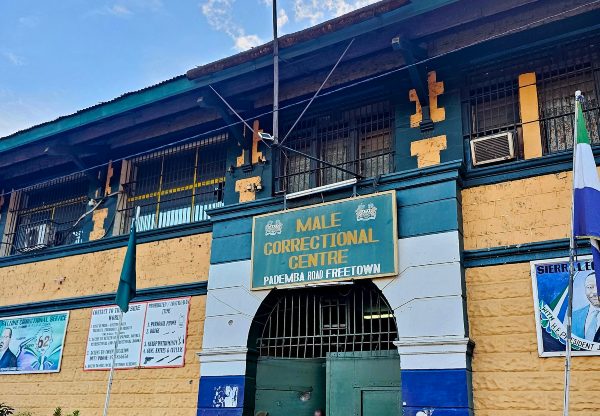
The Freetown Male Correctional Centre, originally built for 324 inmates, holds 1,624 inmates, five times its intended capacity. At the Female Correctional Centre in New England Ville, capacity has risen from 18 to 67 inmates, while the Waterloo Pre-Trial Correctional Centre, built for 110 inmates, now holds 271 inmates.
The auditors warn that overcrowding exposes inmates to serious health risks, including the spread of infectious and communicable diseases, and increases the likelihood of violence and disorder, which may be difficult to manage due to limited staffing levels.
These conditions put inmates, correctional officers and other stakeholders at risk, the report stated.
To address the situation, the report recommends that the director-general of Correctional Services engage the judiciary and other stakeholders to reform remand practices and sentencing, with the goal of reducing inmate numbers, easing congestion and cutting unnecessary costs to the government.